
Resume - Gary W.
Sims
Born 23 January 1944 in West Hollywood, California to Betty Faye Sims (nee Harvey) and Jack Cole Sims
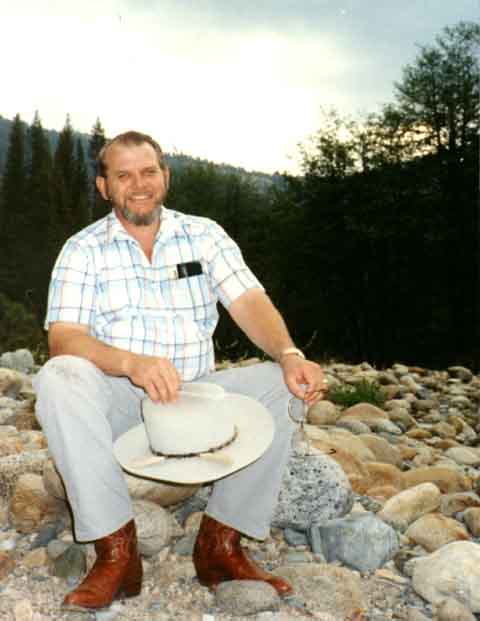
Married 17 August 1962 to Cindy R. Goodsell. Two daughters, Tammi Joann and Diana Sue.

Sims enlisted in the United States Air Force in 1963, reaching the rank of staff sergeant in intelligence specialties while serving in the Far East. He earned a commission in 1967 through the Airman Education and Commissioning Program. He was awarded a regular commission in 1980, and retired in 1983 with the rank of Major. After retirement, Sims joined NASA as a senior engineer at California Institute of Technology, Jet Propulsion Laboratory. He went on to found the Combat Data Systems Laboratory for Loral Electro-Optical Systems, and in 1986, Goodsell-Sims and he created Stonehaven Laboratory -- an independent design and analysis firm. Stonehaven acted as an "honest broker" in assessing complex engineering and project management disputes for various military intelligence offices until 1994, when Sims and Goodsell-Sims retired. Goodsell-Sims died in 2012 after fifty years of marriage.
![[Dividing Line Image]](div.gif)
Training and
education
- Indiana University, Special Studies Group, Chinese
Language and Culture
Distinguished graduate - U.S. Air Force intelligence operator school, San
Angelo, Texas
- Arizona State University, Bachelor of Science in
Business Administration, with minor in mathematics
Graduated with highest distinction. Awarded Phi Kappa Phi and tendered membership in Phi Beta Kappa. - Leland Stanford Jr. University, Master of Science,
Computer Science
- U.S. Air Force post-graduate engineering training
- Air University Instructors College
Distinguished graduate
Qualifications, by
field
Engineering
- USAF-rated expert in four fields of engineering:
- Computer hardware
- Computer software
- Computer systems and
networks
- Communications
- Extensive field experience in:
- Design and development
of life-critical systems
- Verification and
validation of life-critical systems
- Management of
engineering and software developments
- Analytical assessment
of complex development decisions
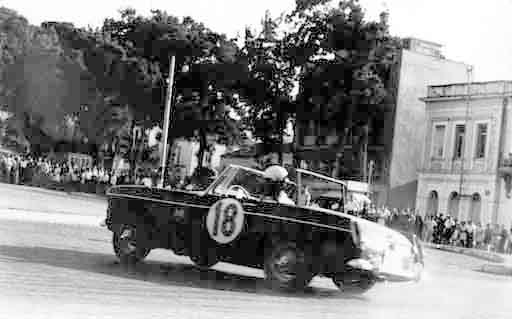
- ... and Greek street
racing
Linguistics
- Fluent in English, Mandarin Chinese, and Modern Greek
- Qualified in Spanish and German
- Conversant in French, Italian, Turkish, and to a lesser
degree in other languages.
Teaching
- Graduate teaching assistant to Robert W. Floyd, Department
of Computer Science, Leland Stanford Jr. University
- Assistant Professor of Aerospace Studies and
Mathematics, University of Minnesota-Duluth. Admitted to teach in the
Graduate School of Business, University of Minnesota. Member of the
foundation faculty for the degree of Computer Science at the Duluth
campus.
This triple appointment to a host university was at that time unique in the history of the Air Force's Reserve Officers Training Corps. In addition to the full curriculum of military studies, the courses Sims taught to the general student population included undergraduate mathematics and computer science, courses in international relations and the history and causes of warfare, and two graduate courses in decision theory and analysis. - Air Force Instructor of the Year, 1980.
Recipient of the Colonel Leo A. Codd Memorial Award for excellence in instruction, presented by Bob Hope for the American Defense Preparedness Association
Management
- Chief, intelligence processing branch, overseas
location
- Chief, Metric Data Systems, Western Test Range, Vandenberg Air Force Base
Governed the operations and engineering development of the network of guidance and tracking radars around the Pacific Basin and their associated computers, with emphasis on the real-time job of protecting civilian populations from errant launch vehicles. - Director of various intelligence-related space research
programs, Space and Missile Systems Organization
- Chief, Strategic Systems Assessment Branch, Defense
Support Program Office, Los Angeles Air Force Station
Directed program to assess the strategic warning system of the United States -- that is, the ability of U.S./U.K. surveillance assets to sense and recognize the start of a nuclear attack on the United States at the earliest possible time and without false alarms. Proposed improvements to U.S. strategic warning systems and procedures, and reviewed the progress of changes as they were implemented. - Commandant of Cadets, Detachment 417, Reserve Officers
Training Corps.
- Deputy Director, Digital Systems Division, Computer
Center, Wright-Patterson Air Force Base
Designed the first network of computers spanning the Air Force Aeronautical Systems Center, the Wright Aeronautical Laboratories, and the 4950th Aerospace Test Wing. Headed team of 300 engineers developing the network and associated application software. This project was designated the lead program for networking program offices within Air Force Systems Command. A "program office" is the military organization tasked with developing items like the B-1 and B-2 bombers and the Stealth Fighter. The engineering activity supported by this network included thousands of engineers and totaled several hundreds of billions of dollars. - Supervisor, Systems Engineering Group, Section 318, Jet
Propulsion Laboratory, National Aeronautics and Space Administration
- Director, Combat Data Systems Laboratory, Loral
Electro-Optical Systems
- Director, Stonehaven
Laboratory